Ensuring sterility is not a final inspection task. It is a controlled process that begins with material selection and component design. In China’s medical manufacturing sector, this discipline supports safer devices, stronger supplier confidence, and more reliable regulatory submissions. The central question is simple: How to ensure sterility of medical equipment components?
Dr. William A. Rutala, a leading authority on healthcare disinfection and sterilization, stated, “Cleaning must precede disinfection and sterilization.” This principle remains practical on the production floor. Residual oil, particles, packaging fibers, and hidden surface gaps can protect microorganisms from sterilization. Therefore, manufacturers should define cleaning methods, validate sterilization cycles, and monitor each critical parameter. Temperature, pressure, humidity, gas concentration, and exposure time need documented control.
ISO 13485 supports quality management, while ISO 17665, ISO 11135, and ISO 11137 guide common sterilization processes. Biological indicators and chemical indicators provide valuable evidence. They do not replace process validation. Packaging integrity also deserves close attention. A sterile component can become contaminated through a pinhole, weak seal, or careless handling.
Experienced teams use cleanroom zoning, personnel training, environmental monitoring, and traceable batch records. Yet no system is flawless. A complete checklist may still hide an untested connection or overlooked material change. That weakness deserves honest review. This guide examines China’s top ten practical approaches, including risk assessment, supplier control, validation, storage, and continuous improvement.
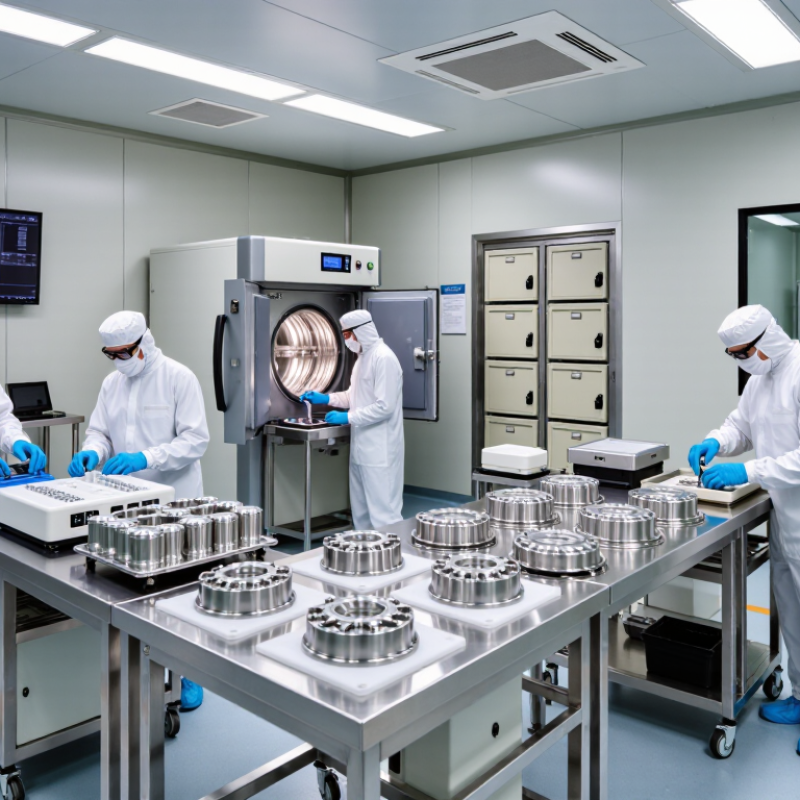
China Top 10: How to Ensure Sterility of Medical Components?
Defining sterility requirements starts with intended use, not a preferred sterilization method. A component entering sterile tissue needs stricter evidence than an external device. WHO’s 2022 Global Report on Infection Prevention and Control estimates that 7 in 100 acute-care patients in high-income countries acquire healthcare-associated infections. The figure reaches 15 in lower- and middle-income countries. These numbers make vague sterility claims risky.
For many terminally sterilized products, teams target a sterility assurance level of 10⁻⁶. However, this value should match the product’s risk assessment and validation strategy. ISO 11737-1 supports bioburden testing before sterilization. ISO 11135, ISO 11137, and ISO 17665 address ethylene oxide, radiation, and moist heat processes. Packaging integrity also matters. A sterile component cannot remain sterile if seals crack after transport, aging, or repeated handling. FDA’s 2023 guidance on sterilization emphasizes process definition, routine monitoring, and documented validation evidence.
Tips: Define the microbial limit, sterilization method, packaging life, and acceptance criteria before production. Record bioburden trends by batch. Inspect narrow channels and rough surfaces carefully. Small design changes can alter sterilization performance. Many teams overlook this. A useful improvement is independent review of worst-case loads, although it may slow approval. That delay is often cheaper than discovering an incomplete sterility claim after distribution.
| No. | Sterility Requirement | Typical Requirement or Target | Control and Verification Method | Relevant Reference | Key Evidence |
|---|---|---|---|---|---|
| 1 | Sterility Assurance Level | A terminal sterilization process commonly targets an SAL of 10-6, meaning a theoretical probability of no more than one viable microorganism in one million sterilized items. The selected SAL must be justified for the device and its intended use. | Define the SAL during risk management and validate the sterilization cycle using a recognized process-specific method. | ISO 14937; ISO 11135; ISO 11137; ISO 17665 | Sterilization validation report and approved cycle specification |
| 2 | Bioburden Control | The microbial population on components before sterilization should remain within validated limits. Limits depend on the product, manufacturing process, sterilization method, and packaging configuration. | Use controlled manufacturing areas, cleaning procedures, hygienic handling, and routine bioburden testing with documented sampling plans. | ISO 11737-1; ISO 11737-2 | Bioburden trend data, recovery-efficiency studies, and alert/action limits |
| 3 | Sterilization Method Selection | Select a method compatible with material composition, geometry, temperature sensitivity, moisture tolerance, residual limits, and intended clinical use. | Perform material compatibility, functionality, aging, and safety assessments before process validation. | ISO 14937; ISO 17665; ISO 11135; ISO 11137 | Material compatibility assessment and risk-management records |
| 4 | Process Validation | The process must demonstrate repeatable achievement of the specified sterilization conditions throughout the defined product load and worst-case locations. | Conduct installation qualification, operational qualification, and performance qualification, including load configuration and process challenge devices where appropriate. | ISO 14937; ISO 11135; ISO 11137; ISO 17665 | IQ/OQ/PQ protocols, calibrated instruments, and approved validation report |
| 5 | Packaging and Sterile Barrier | The sterile barrier system must maintain sterility until the stated expiry date under specified transport, storage, and handling conditions. | Validate sealing, package integrity, microbial barrier performance, distribution simulation, and real-time or accelerated aging as justified. | ISO 11607-1; ISO 11607-2; ASTM F88; ASTM F1929; ASTM F2096 | Seal-strength results, leak-test results, aging data, and distribution testing |
| 6 | Environmental and Personnel Controls | Manufacturing and packaging areas should be controlled according to product risk, including particulate, microbial, temperature, humidity, gowning, and personnel practices. | Establish environmental monitoring, cleaning validation, gowning qualification, access control, and investigation procedures for excursions. | ISO 14644 series; ISO 13485; applicable GMP requirements | Environmental monitoring results, cleaning records, and training records |
| 7 | Sterilant Residuals | For ethylene oxide processing, residual ethylene oxide, ethylene chlorohydrin, and ethylene glycol must meet applicable product and patient-exposure limits after aeration. | Set aeration conditions, test representative product samples, and evaluate worst-case materials, geometries, and packaging. | ISO 10993-7; ISO 11135 | Residual-analysis reports and validated aeration records |
| 8 | Bacterial Endotoxins | For components that contact blood, cerebrospinal fluid, or other relevant patient pathways, endotoxin limits must be established according to intended use and applicable regulatory requirements. | Control water, raw materials, washing, storage, and handling; verify with a suitable, validated bacterial endotoxin method. | USP <85>; Ph. Eur. 2.6.14; applicable regulatory guidance | Endotoxin test results, inhibition/enhancement study, and limit rationale |
| 9 | Packaging, Storage, and Transport | Sterility must be protected against humidity, temperature extremes, vibration, compression, puncture, seal damage, and improper handling throughout distribution. | Define storage conditions and transport limits; perform distribution simulation and inspect packages after testing. | ISO 11607-1; ISO 11607-2; ASTM D4169 or equivalent methods | Transport qualification, storage monitoring, and post-test package inspection |
| 10 | Routine Release and Change Control | Each sterilized lot should be released only after review of process records, load configuration, indicators, deviations, packaging status, and required test results. | Use documented batch records, calibrated monitoring equipment, approved specifications, deviation investigations, and formal change control. | ISO 13485; ISO 14937; applicable quality-system requirements | Lot-release checklist, sterilization records, nonconformance records, and requalification plan |
Note: Sterility requirements must be finalized through product-specific risk management, intended-use assessment, applicable regulatory requirements, and validated sterilization and packaging processes. Numerical limits should not be applied without documented scientific and regulatory justification.
Materials must tolerate cleaning and sterilization without deforming or releasing residues. Stainless steel often handles repeated heat cycles. Silicone and PEEK require compatibility testing. Check heat, radiation, moisture, chemicals, aging, extractables, and leachables early.
Rounded corners reduce residue traps. Fewer joints simplify inspection and cleaning. Closed transfer paths reduce recontamination. Smooth surfaces help, but they cannot replace validated cleaning. Small details matter.
Match the method to the component’s materials and design. Consider moist heat, ethylene oxide, radiation, or another suitable process. Define time, temperature, pressure, concentration, or dose ranges. The best method is not always the fastest one.
Validation should include installation, operational, and performance qualification. Measure bioburden before sterilization. Map difficult locations, trapped air, and crowded load areas. Use biological indicators where appropriate. Keep traceable records.
No. Materials age, packaging changes, and suppliers may alter components. Requalification should follow a documented risk-based plan. Review cycles after maintenance, alarms, equipment changes, or unusual results. Validation has limits.
Packaging must protect seals during transport and storage. A sterile component can become unsafe after package damage or poor handling. Inspect seals, storage conditions, and transport exposure. Clean production alone is insufficient.
Records should connect results to one production lot. Include the lot number, sterilization date, equipment identity, temperature, pressure, exposure time, and calibration status. Record reviewer approval. Rushed signatures can hide uncertainty.
A sterility test cannot examine every component. No growth provides useful evidence, but not absolute proof. Document sample quantity, media, incubation conditions, analyst identity, and controls. A missing incubation time weakens the investigation.
Ensuring sterility in medical components requires a controlled process that begins with clearly defined sterility requirements based on the component’s intended use, contact conditions, and risk level. How to ensure sterility of medical equipment components depends on integrating suitable material selection and design features that support clean manufacturing, minimize particle retention, and withstand the chosen sterilization process without losing functionality.
During production and assembly, manufacturers should control personnel practices, environmental conditions, equipment cleanliness, and bioburden through documented procedures and monitoring. A validated sterilization method must then be selected according to the component’s materials, geometry, packaging, and compatibility limits. Finally, sterility assurance should be supported by appropriate testing, process validation, routine monitoring, deviation management, and complete quality records. This systematic approach helps demonstrate that each component is consistently produced under controlled conditions and remains safe and suitable for its intended medical application.

 Xinli Technology