Choosing materials for durable mechanical parts is not a simple matter of picking the hardest option. Hardness can resist scratches, yet it may increase brittleness, machining difficulty, or unexpected cracking. The right decision depends on load, motion, temperature, corrosion, manufacturing method, and maintenance conditions.
Materials scientist Professor Michael F. Ashby states, “Materials are the stuff of design.” This principle guides our approach to How to choose materials for durable mechanical parts. A steel gear inside a dusty gearbox faces different risks from an aluminum bracket on outdoor equipment. A stainless-steel shaft may resist moisture, but its cost and galling tendency require careful evaluation. Polymer components can reduce noise and weight, although heat and creep may limit their service life.
Real performance matters.
This guide compares ten practical material groups, including carbon steel, alloy steel, stainless steel, aluminum alloys, brass, bronze, cast iron, engineering plastics, ceramics, and titanium. Each section considers strength, wear resistance, fatigue behavior, corrosion performance, machinability, weight, and cost. The discussion also connects laboratory data with workshop realities, such as poor lubrication, surface damage, dimensional variation, and rushed maintenance.
No material is perfect. That is worth admitting. A material that performs well in one assembly may fail after a small design change. Engineers should confirm supplier certificates, review relevant test data, and validate prototypes under realistic loads. We will also question common assumptions, because “stronger” does not always mean “more durable.” The best choice balances performance, reliability, production limits, and the part’s actual working environment.
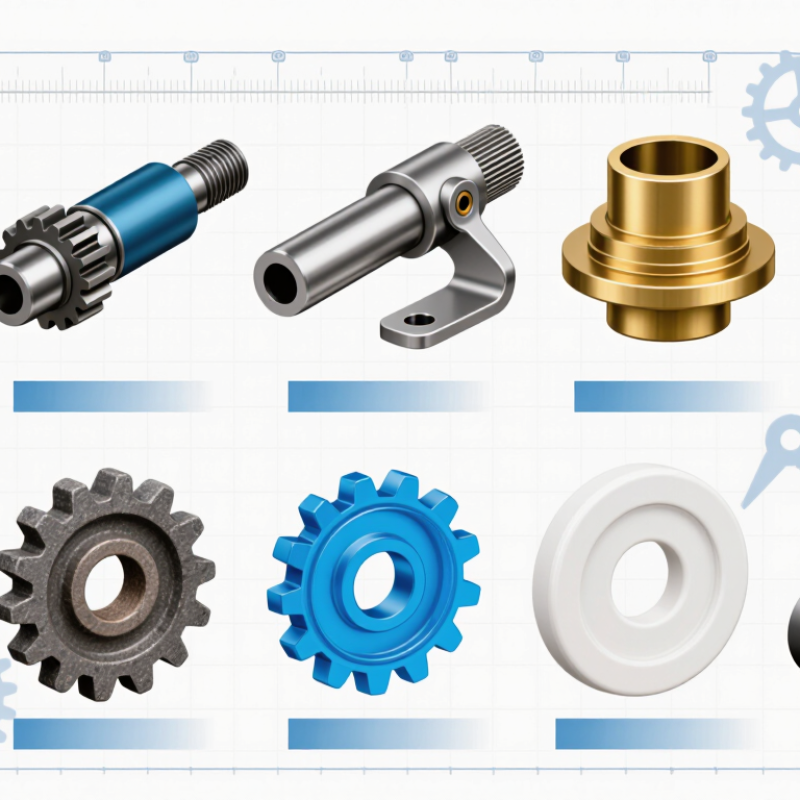
Defining Durability in Mechanical Part Materials
Durability in mechanical parts is not simply hardness. It describes how well a material keeps its function under repeated loads, friction, heat, moisture, and impact. A hardened steel may resist scratching, yet crack under cyclic stress. A polymer can absorb vibration, but soften near a heat source. Context decides. In practical design reviews, I define durability through the part’s actual failure risks, not through a single material label. This distinction prevents expensive overengineering.
Start with the service environment. Record load direction, contact pressure, speed, temperature range, chemicals, and expected cycles. Then match properties to those conditions. Fatigue strength matters for rotating shafts. Wear resistance matters for sliding bushings. Corrosion resistance matters where condensation reaches unprotected surfaces. Toughness can be more valuable than extreme hardness when sudden impacts occur. Dimensional stability also deserves attention; a part that bends slightly may misalign an entire assembly. Test samples under realistic conditions, including poor lubrication or occasional overloads. Ideal laboratory results can mislead.
Material selection should also consider manufacturing quality. Heat treatment, grain direction, surface finish, and machining errors can change real performance. I have seen a carefully selected alloy fail because a sharp corner concentrated stress. Small details matter. Engineers should compare test data, safety factors, inspection records, and maintenance access before approval. The choice may remain uncertain, especially when field data is limited. That uncertainty should be documented, reviewed, and reduced through prototype testing rather than hidden behind impressive specifications.
Comparing the Top Materials for Strength and Wear Resistance
For durable mechanical parts, strength and wear resistance rarely come from the same material. Alloy steel handles heavy loads well and resists bending under repeated stress. Hardened tool steel offers stronger wear resistance for gears, dies, and cutting components. However, excessive hardness can make a part brittle during impact. That trade-off is easy to miss.
Stainless steel performs reliably in humid or corrosive environments, but some grades may gall during sliding contact. Aluminum is light and easy to machine, yet its softer surface wears quickly without treatment. Titanium provides excellent strength-to-weight performance, though its cost and difficult machining limit practical use.
Bronze remains valuable for bushings because it slides smoothly against steel. Engineering plastics reduce noise and weight. Their wear life changes sharply with heat and load. Ceramics resist abrasion extremely well, but sudden impact can crack them.
Material selection should begin with the actual failure risk. Check load, contact pressure, speed, temperature, lubrication, and surface finish. In workshop testing, a polished shaft often lasts longer than a harder shaft with rough machining marks. A material chart can mislead. I have seen strong parts fail because moisture entered a poorly sealed joint. Prototype testing under real cycles is more reliable than choosing by tensile strength alone. Leave room for inspection, replacement, and imperfect operating conditions.
Matching Material Properties to Mechanical Part Requirements
Top 10 Materials for Durable Mechanical Parts: How to Choose
Matching material properties to mechanical part requirements prevents premature failure. The strongest option is not always the best option. Carbon steel suits heavily loaded shafts, pins, and frames. Stainless steel performs better where moisture or cleaning chemicals are present. Alloy steel offers higher strength after heat treatment. Aluminum reduces weight, but its lower stiffness can increase deflection. Titanium combines low density with excellent corrosion resistance, though machining costs may rise.
Brass and bronze work well for bushings, gears, and sliding components. Bronze usually handles friction and seizure better. Tool steel supports cutting edges and high-wear dies. Acetal provides low friction and stable dimensions in many light-duty assemblies. Nylon absorbs impact, but moisture can change its size and strength. In real part reviews, engineers should check fatigue, temperature, surface finish, and joining methods together. A material chart is only a starting point. Small oversights matter.
Tips: Define the load path before choosing a material. Compare yield strength, fatigue strength, hardness, corrosion resistance, and machinability. Test a prototype under real cycles, not only static load. I have seen lightweight designs fail because stiffness was ignored. Cost estimates should include coating, heat treatment, waste, and maintenance. When requirements conflict, document the compromise clearly. That record can guide the next revision.
Top 10 Materials for Durable Mechanical Parts: How to Choose?
Representative ultimate tensile strength values are shown for commonly used engineering materials. Actual performance varies with grade, heat treatment, processing, temperature, and part geometry.
Use tensile strength as an initial screening factor, then match the material to wear resistance, fatigue loading, corrosion exposure, operating temperature, weight, manufacturability, and cost. Plastics may provide lower strength but excellent low-friction or chemical-resistant performance.
Selecting the Best Material for Long-Term Mechanical Performance
Durable mechanical parts begin with service conditions, not a favorite material. List load, impact, temperature, moisture, chemicals, motion, and maintenance access. Compare ten practical families. They include alloy steel, stainless steel, tool steel, aluminum, titanium, nickel alloys, bronze, brass, engineering polymers, and ceramics. Each offers a different balance of strength, weight, wear resistance, and cost.
Corrosion deserves early attention. The NACE IMPACT study estimated global corrosion costs at 2.5 trillion dollars annually, equal to about 3.4% of global gross domestic product. A small seal leak can turn a strong steel shaft into a rough, weakened surface. Stainless steel may suit wet service, while coated alloy steel can perform better under heavy loads. The surrounding environment decides. Not the catalog label.
Fatigue testing should reflect real cycles, not only static tensile strength. High hardness is not always better. Brittle ceramics resist wear but may fail after a sharp impact; engineering polymers reduce noise but can creep under constant pressure. Steel remains widely available, with the World Steel Association reporting about 1.88 billion tonnes of crude steel production in 2023. That supply advantage matters for replacement parts. Still, availability can hide machining waste and surface-treatment costs. A practical selection should compare total life-cycle cost, test results, repair access, and realistic manufacturing tolerances. Some choices will remain uncertain until field data returns.
Top 10 Materials for Durable Mechanical Parts: How to Choose? – Selecting the Best Material for Long-Term Mechanical Performance
| Rank |
Material |
Typical Density
(g/cm³) |
Typical Tensile Strength
(MPa) |
Typical Yield Strength
(MPa) |
Hardness Range |
Continuous Service Temperature
(Approx.) |
Corrosion Resistance |
Wear Resistance |
Machinability |
Typical Mechanical-Part Applications |
| 1 |
Hardened Alloy Steel |
7.75–7.85 |
900–1,500 |
700–1,300 |
35–55 HRC |
Up to approximately 300°C |
Low to moderate without protective treatment |
★★★★★ |
Moderate to difficult after hardening |
Gears, shafts, pins, high-load fasteners, dies, and heavily loaded machine components |
| 2 |
Stainless Steel |
7.70–8.00 |
500–1,200 |
200–1,000 |
150–500 HB |
Approximately 400–800°C, depending on grade |
★★★★★ |
Moderate to high, depending on grade and treatment |
Moderate; work hardening may occur |
Food-processing parts, marine hardware, pumps, valves, medical components, and exposed fasteners |
| 3 |
Ductile Cast Iron |
6.90–7.40 |
400–900 |
250–650 |
150–300 HB |
Up to approximately 400°C |
Moderate; protective coatings may be required |
★★★★☆ |
Good |
Housings, brackets, pulleys, gear cases, brake components, and vibration-damping structures |
| 4 |
Carbon Steel |
7.80–7.85 |
400–900 |
250–700 |
120–300 HB |
Up to approximately 400°C |
Low without painting, plating, or other protection |
★★★☆☆ |
★★★★★ |
General-purpose shafts, brackets, frames, bolts, plates, and structural machine parts |
| 5 |
Aluminum Alloy |
2.65–2.85 |
200–600 |
100–500 |
60–170 HB |
Approximately 100–200°C |
Good due to its naturally protective oxide layer |
Low to moderate unless surface-treated |
★★★★★ |
Lightweight housings, brackets, pulleys, robotic components, vehicle parts, and heat-transfer structures |
| 6 |
Titanium Alloy |
4.40–4.60 |
800–1,100 |
700–1,000 |
250–400 HB |
Approximately 300–500°C, depending on grade |
★★★★★ |
Moderate; galling can occur in sliding contact |
Difficult and relatively costly to machine |
Aerospace fasteners, chemical-processing parts, marine components, and high-strength lightweight structures |
| 7 |
Bronze |
8.70–8.90 |
300–800 |
150–500 |
70–220 HB |
Approximately 150–300°C |
Good in many atmospheric and marine environments |
★★★★☆ |
Good |
Bushings, bearings, worm gears, thrust washers, valve components, and low-friction wear parts |
| 8 |
Engineering Nylon |
1.10–1.20 |
50–90 |
25–70 |
70–100 Shore D |
Approximately 80–120°C, depending on grade and load |
★★★★★ |
★★★★☆ |
Good |
Gears, rollers, guides, bushings, wear pads, cable pulleys, and lightweight low-noise mechanisms |
| 9 |
Polyacetal (POM) |
1.39–1.43 |
55–75 |
35–60 |
80–90 Shore D |
Approximately 80–110°C |
★★★★★ |
★★★★☆ |
★★★★★ |
Precision gears, sliding elements, rollers, bearings, clips, pump parts, and dimensional-stability components |
| 10 |
PEEK |
1.30–1.33 |
90–110 |
90–110 |
85–95 Shore D |
Approximately 240–260°C continuous use |
★★★★★ |
★★★★★ |
Moderate; requires controlled machining conditions |
High-temperature seals, bearings, electrical insulators, chemical-process parts, and demanding lightweight assemblies |
Note: Values are representative ranges for commonly used grades and conditions. Actual performance depends on alloy or polymer grade, heat treatment, manufacturing process, surface finish, operating temperature, load, lubrication, and environmental exposure.
Conclusion
Choosing the right material is essential for producing mechanical parts that remain reliable under repeated loads, friction, impact, and changing environments. Durability involves more than hardness or tensile strength; it also includes wear resistance, fatigue life, dimensional stability, corrosion resistance, and the ability to maintain performance over time. Common options such as alloy steels, stainless steels, aluminum alloys, engineering plastics, and ceramics each provide different advantages depending on the application.
How to choose materials for durable mechanical parts requires matching material properties to actual operating requirements. Consider the type and intensity of loads, temperature, moisture, chemical exposure, lubrication, surface contact, and expected service life. Cost, availability, machinability, heat treatment, finishing needs, and maintenance should also influence the decision. A balanced evaluation of performance and manufacturing factors helps engineers select materials that deliver dependable long-term operation without unnecessary expense or complexity.

 Xinli Technology